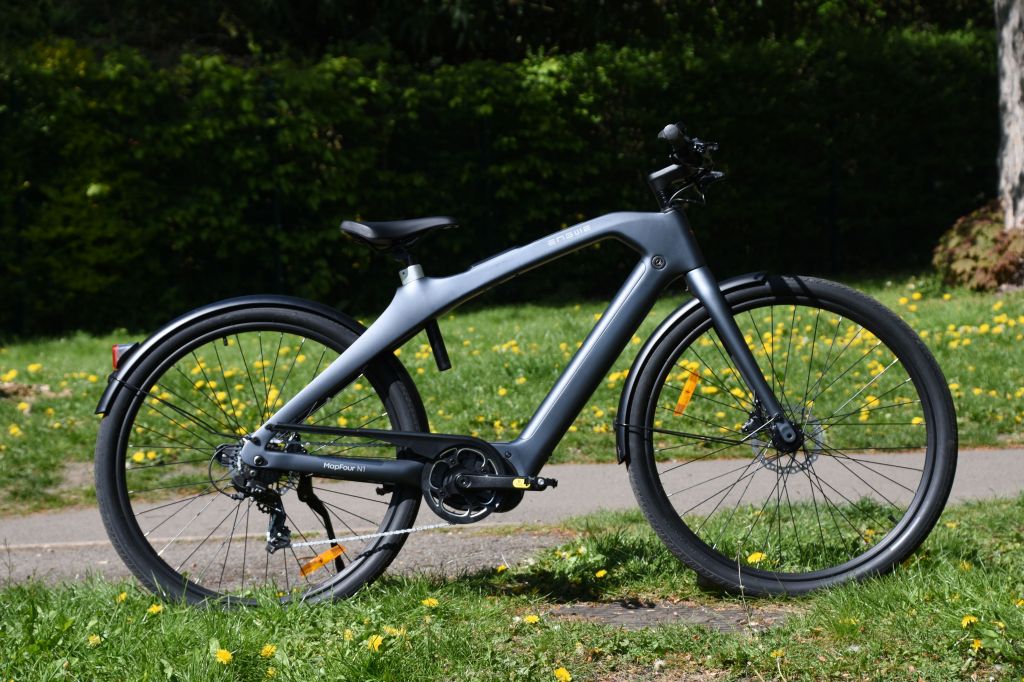
The MapFour N1 Pro, on the face of it, offers fantastic value at its current discount price of £1599 for a bike that tipped my scales just over 20kg. For a fairly lightweight e-bike with a high torque 80Nm rated mid-drive motor and plenty of extra features, that looks to be plenty of bang for your buck.
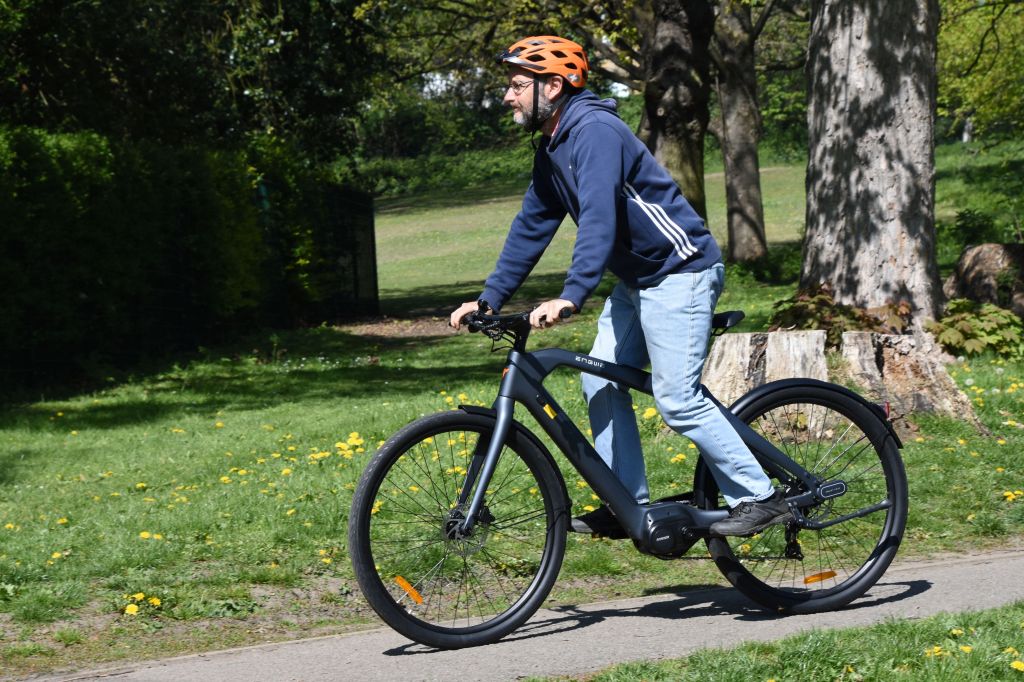
The Mapfour N1 Pro combines a futuristic looking carbon fibre frame with a high torque-rated mid drive motor (generally regarded as better hillclimbers than hub motors), medium capacity battery that can be removed for charging plus lights, mudguards and a kickstand.
Does the Carbon Fibre Frame Make it Really Light?
There are lighter metal-framed (aluminium alloy) mid-drive e-bikes than the N1 Pro – but most of these use lighter and (on paper at least) less powerful mid-drives like the Bosch Performance Line SX, Fazua Ride 60 or the TQ-HPR60. These are around 1kg lighter than the most powerful mid-drive motors out there and rated at around 50-60Nm of torque compared top the 80Nm plus of the most powerful legal motors. To give one example, Cube’s Editor Hybrid range all feature the Bosch Performance Line SX motor and claim to be up to several kg lighter than the N1 Pro – though note they are substantially pricier.
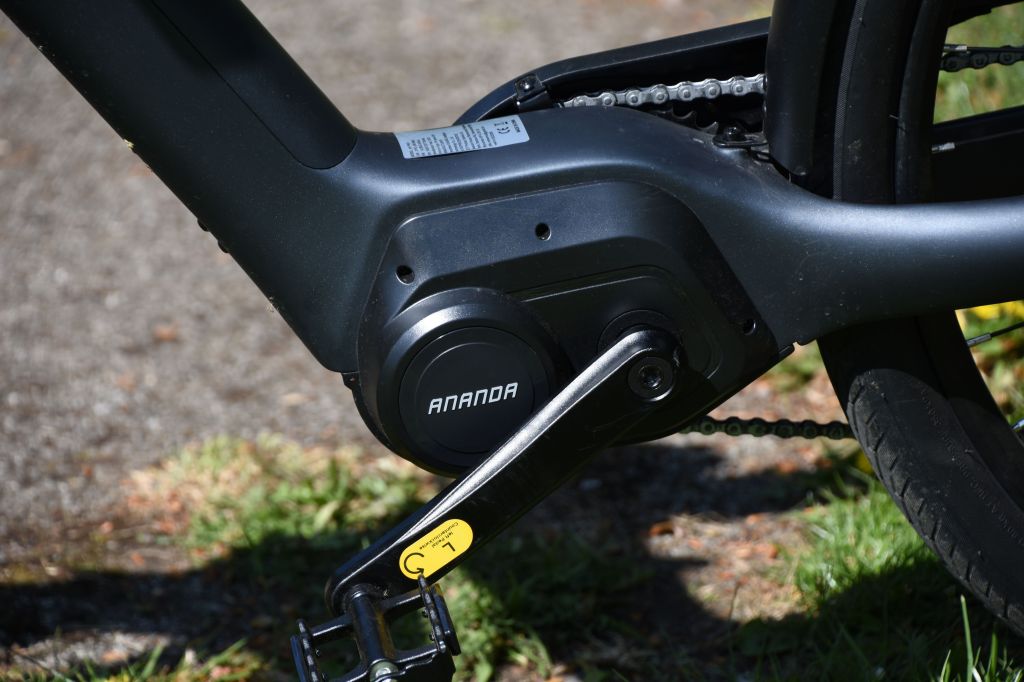
A ‘full power’ e-bike with a 80Nm plus motor is usually nearer the 25kg mark – not only are the motors around 3kg which is fairly heavy by e-bike standards but, as they are more powerful, they tend to need bigger – and heavier – batteries.
So, on paper at least, if we are comparing apples to apples (ie if comparing the N1 Pro to other bikes with powerful mid-drives) it seems the carbon frame on this particular Mapfour bike does make it lighter than a lot of the competition.
All this begs the question does it really live up to the hype its 80Nm motor promises? I put it through it’s paces over some seriously steep hill climbs to find out.
Testing vs Bosch
Mapfour say the Ananda mid-drive motor has 80Nm of torque – the more torque an e-bike has the better it purports to be at climbing hills. I say ‘purports’ as often in the past claims of high torque haven’t always proved to tally with the actual hillclimbing abilities of the test bike in question.
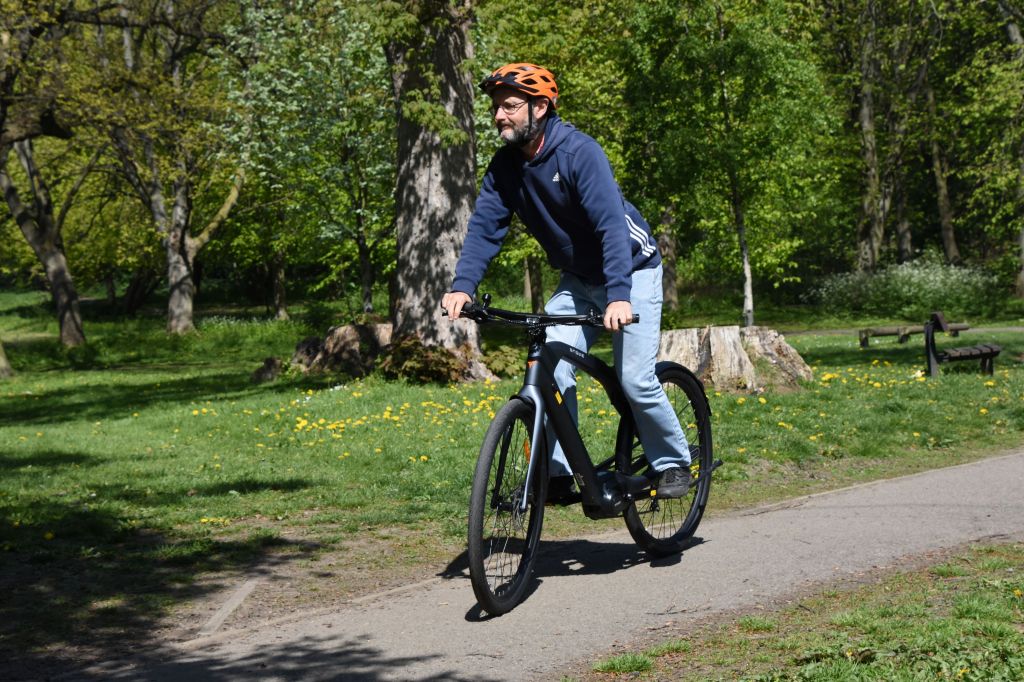
Over the years Bosch mid-drive motors have proved a reliable benchmark – I test a lot of them up the same hillclimbs so I use their mid-drive torque figures as a benchmark for my testing purposes. I compared the Ananda against bikes with the Bosch Performance Line and the Performance Line SX mid-drives.
The Ananda has a paper spec of 80Nm torque whilst the SX claims a max torque of 55Nm and the Performance Line claims 75Nm. Up my local short but ultra steep hillclimb test the Ananda-equipped N1 Pro performed in line with the torque rating – around 13 seconds ahead of the SX powered e-bike and 8 seconds ahead of the Performance Line bike.
All bikes had fairly narrow gear ranges and I think the results could have been improved with a lower bottom gear – the slower the time the more out of breath I felt and even with the N1 Pro I got a pretty good workout, though I wasn’t as out of breath as I was on the ‘Bosch bikes.’ Note Bosch’s latest mid-drives, the Performance PX and the new iteration of the CX are rated at 90Nm and 100Nm peak torque respectively and though I didn’t have one of these to hand during the testing I’m no doubt they would beat the Ananda, especially if fitted to a bike with low gearing, as is often the case with them as they suit touring and mountain bike models in particular.
So the Ananda motor does what it claims to do when put up against a really testing gradient. More broadly it’s a really nice motor system to use with smooth and proportional power that increases over the five power levels. It has a double sided torque sensor which means your pedal effort is rewarded with a proportional amount of power from the motor.
There is a 360Wh battery – I estimated I could get 20-40 miles range over hilly Pennine country and it won’t take long to recharge it as the bike comes with a 9 amp charger in a world where 5 amps is considered fast. 9 amps should mean a full battery from empty in 1.5 to 2 hours.
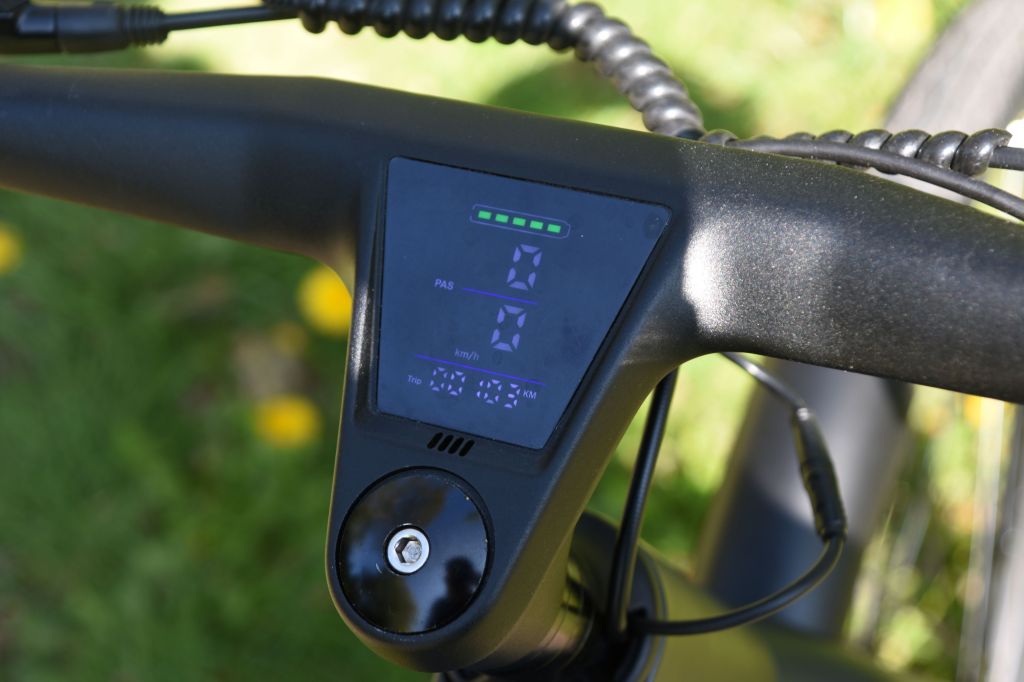
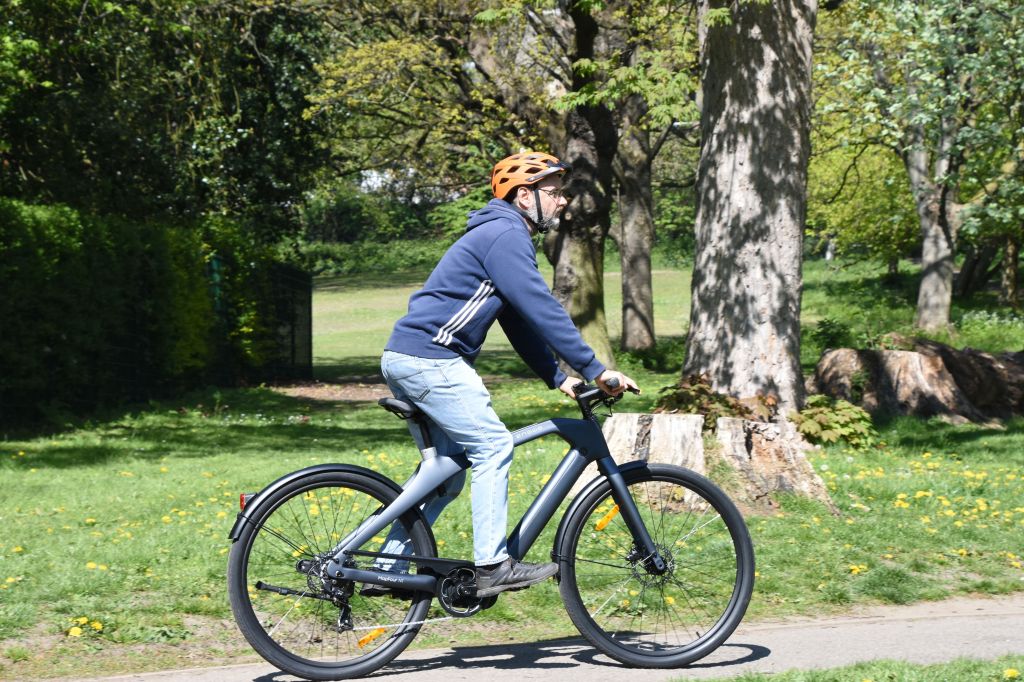
Gears and brakes where both beautifully smooth and easy to use and the handlebar integrated front light in particular was fantastically effective on unlit paths and even had a full beam function. The mudguards are strong alloy but the stays make them rather rattly. Wheels and tyres where freerunning and felt pretty fast and the ride position of the one size frame felt sporty and suited my 5ft 7 inch frame well – if you are a taller rider you may need to request a longer seatpost. There is also an optional rear rack that would make this a fast, fully-equipped commuter and leisure bike.
I was less certain about other aspects of the N1 Pro; the solar powered rear light worked for a while then stopped working – hardwired would have been preferable. The N1 Pro also tries to dazzle with digital extras such as GPS tracking via an app and an automatic rear wheel lock that comes on when the bike is switched off. The former didn’t work reliably for me whilst I was worried that the latter would fail at some point and leave me with a locked but unlockable bike…..
Long term and hidden value
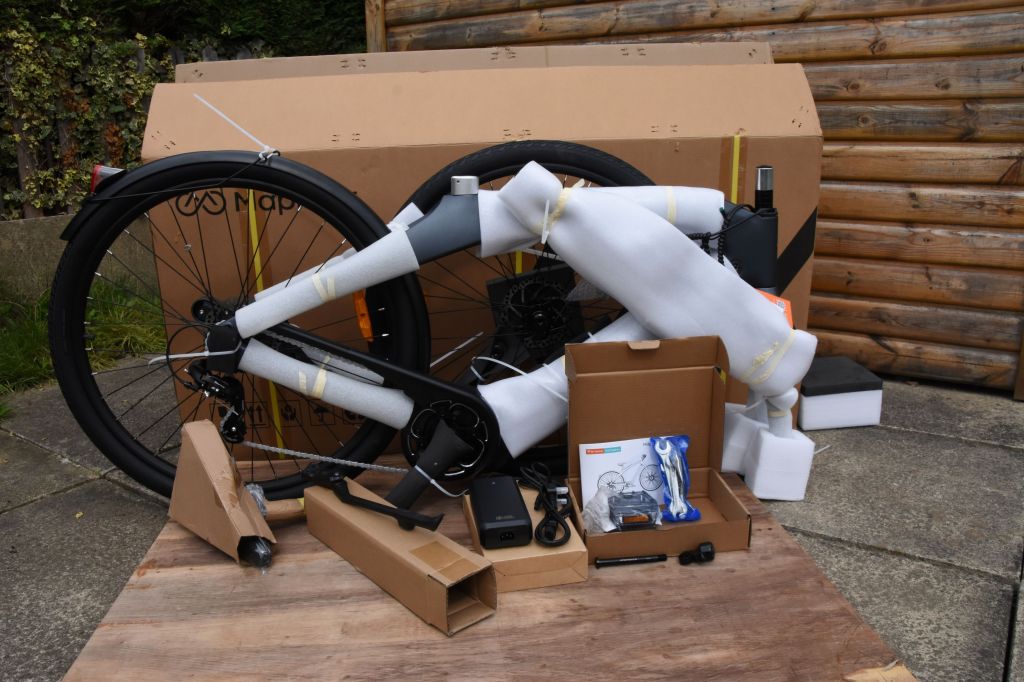
Mapfour are a direct to consumer brand and that is partly what allows them to undercut many competing brands that sell through bike shops and have UK reps and the like. The bike arrives direct to your door as in the picture below so there is a fair bit of assembly to do yourself. Most of this is fairly straightforward but the headset assembly is non-standard and I struggled at first as some of the third party online info on Youtube was wildly wrong and it took an email to Mapfour to get the correct instructions which were not included in the box.
Bosch will typically offer training and backup to bike shops who sell e-bike brands that feature their motor system. I’ve had a great experience with this; a motor was playing up and luckily I took it into a retailer who was near where I was riding and he fixed the software glitch straightaway by plugging it into his computer and running tests. The motor was out of its two year guarantee but the price was fair and it got me straight back on the road. Mapfour take a different approach of trying to solve any potential problems that arise remotely with all the logistical difficulties that that might entail. I also noted that Mapfour offer 12 months warranty on motor and battery against Bosch’s two year warranty.
So clearly the generally pricier Bosch e-bikes have a good amount of ‘hidden value’ that you may appreciate down the line if you run into a problem with the bike. Despite all this the Mapfour N1 Pro really is a great performing e-bike – it’s pretty light, a great hillclimber and has a very attractive price tag.
 LATEST ARTICLES
Leave a comment